Preserving the History, Legends, and Lore of Superstition Mountain
RUGGED PERSISTENCE
Long before there was a museum building at the foot of the Superstition Mountains, there was an idea: the remarkable history, legends and stories of this region deserved to be preserved.
A group of local historians, explorers and preservationists shared a deep connection to the Superstition Mountains. Among the early driving forces were Tom Kollenborn, Larry Hedrick, Clay Worst and Ron Lorenz. Their interests ranged from regional history and exploration to the enduring mystery of the Lost Dutchman Mine, but they shared a common purpose — ensuring that the stories of this place would not disappear.
By the summer of 1979, Kollenborn and Hedrick were actively working toward the creation of a historical society whose ultimate goal would be a public museum devoted to the Superstition Mountains and surrounding region.
On January 8, 1980, a community meeting was held in the boardroom of the Apache Junction Unified School District to formally organize the Superstition Mountain Historical Society. The Society’s Articles of Incorporation were approved by the State of Arizona on March 27, 1980.
At the Society’s first official board election that June, Clayton “Clay” Worst was elected president, with June Woods as vice president, Barry Grandil as treasurer and Carol Prophet as secretary. Larry Hedrick became Museum Director and Tom Kollenborn served as Museum Curator.
The organization had a mission and people committed to it. What it did not yet have was a museum.
Finding a Home at Goldfield
For much of the 1980s, members collected historical materials, conducted research and worked toward the dream of establishing a permanent public museum. The breakthrough came at Goldfield Ghost Town.
Bob and Lou Ann Schoose, who were developing Goldfield, helped provide the young organization with an opportunity it could not have afforded on its own. In 1989, an arrangement was reached under which the Schooses would construct a museum building at Goldfield. The Historical Society would complete and maintain its interior, with rent tied to a percentage of museum admission receipts.
After years of planning and months of work preparing the new space, the museum opened to the public at Goldfield on January 30, 1990. For the first time, the Superstition Mountain Historical Society had a public home for the history it had been created to preserve.
From Goldfield to a Home of Our Own
Eventually, the Museum began to outgrow the space that had given it its start.
The Historical Society began working toward something even more ambitious: a permanent home of its own. Over the years, the Society acquired property along the Apache Trail near the base of the Superstition Mountains. A new museum building was constructed, creating the opportunity not simply to relocate the collection, but to build a place where regional history could be experienced on a much larger scale.
In October 2003, after approximately 13 years at Goldfield, the Museum moved into its new home. It is the property we occupy today.
The Story Kept Growing
The move created possibilities the founders could scarcely have imagined when they first gathered around an idea decades earlier. The Museum expanded beyond the walls of a traditional gallery. Historic structures, machinery and outdoor exhibits became part of the visitor experience. The property became home to the 20-stamp mill, mining and transportation history, and later two treasured survivors of Apacheland Movie Ranch — the Apacheland Barn and Elvis Memorial Chapel.
Today, the Superstition Mountain Historical Society continues its preservation mission through the Superstition Mountain Lost Dutchman Museum.
Our story began with people who believed the history of the Superstition Mountains was worth saving. More than four decades later, that belief still guides us. We preserve artifacts, photographs, documents and stories. We explore the line where history meets legend. We create opportunities for new generations to experience the people, places and events that shaped this extraordinary corner of Arizona. And we do it within sight of the mountain that inspired it all.
The Historical Society preserves the mission.
The Museum brings that mission to life.
Our Team
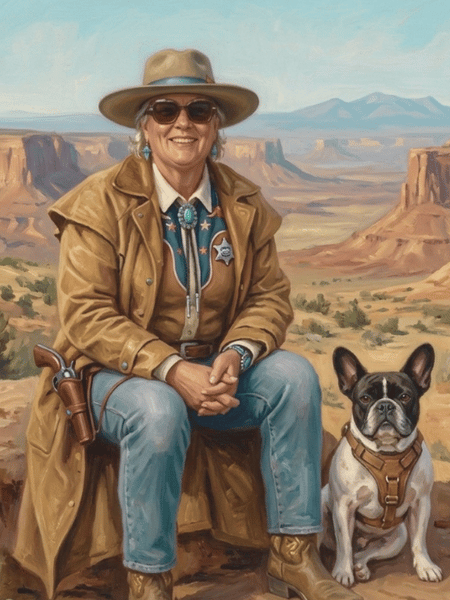
Dr. Corinna Stiles
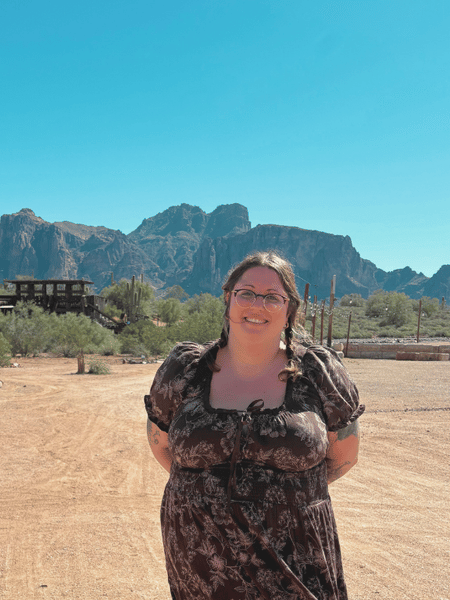
Jessica Joiner
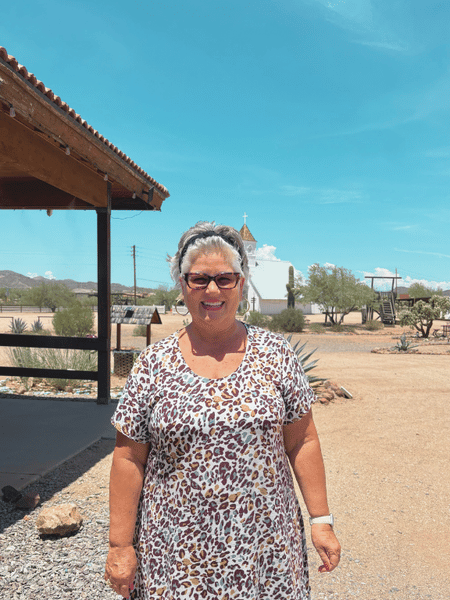
Heidi Holbert
Danielle Torbert
Patrick Millete